Why doesn't ChatGPT recommend my practice?
Published . Last reviewed .
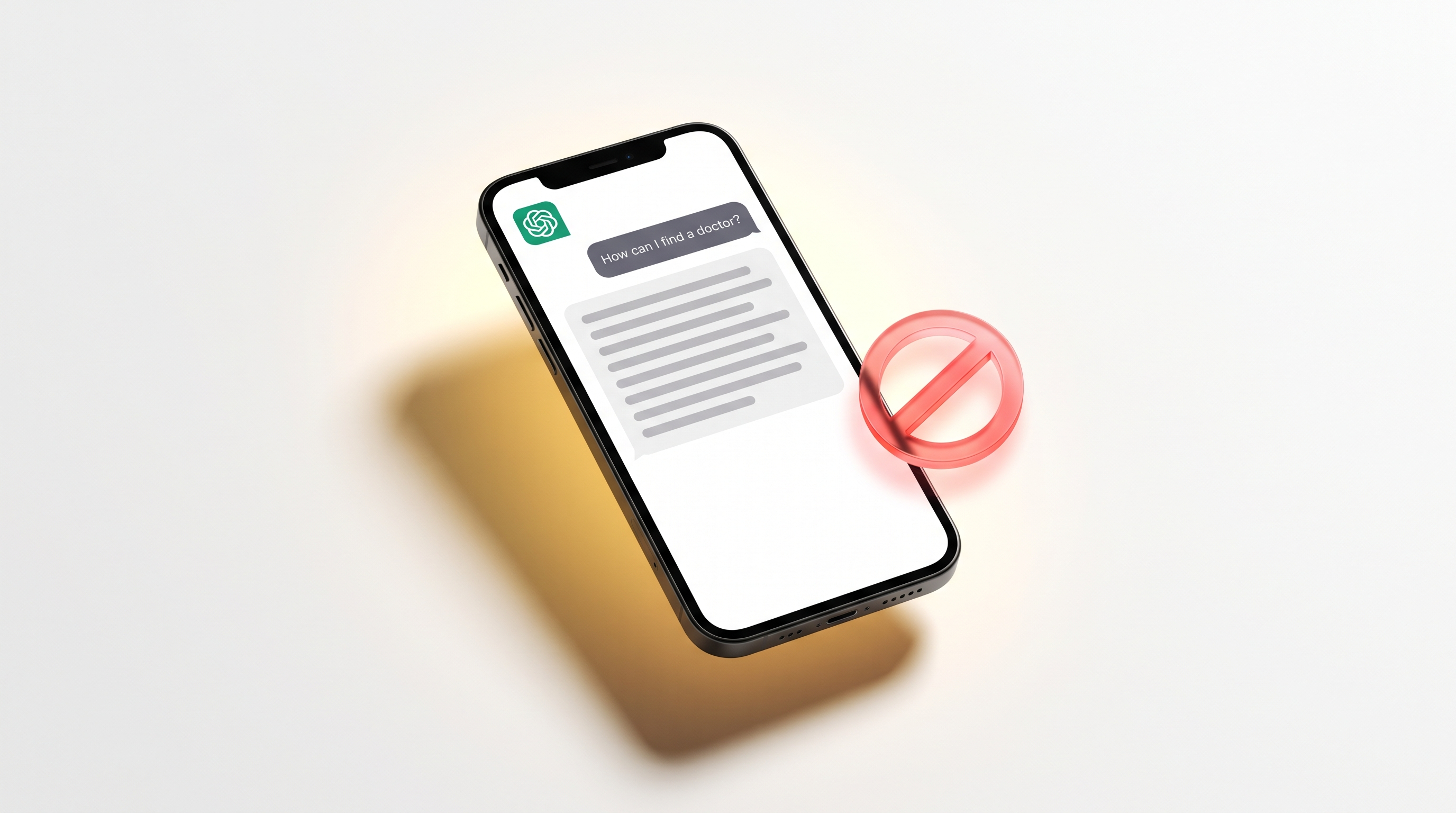
Right now, tonight, someone in your city is in pain and a little scared, and they are not searching for you on Google. They are typing "who is the best knee surgeon near me" into ChatGPT and reading the two or three names it gives back like a verdict. One of those names gets the call tomorrow. If yours is not there, you were never in the running, and here is the cruel part: you will never know it happened. No missed call to trace. No empty chair to point at. Just a patient who trusted a piece of software and went to someone else.
That should make every physician who is good at their job furious. You spent a decade earning your skill. You may have spent real money on a website you are proud of. And in the one place patients are starting to make the decision, none of it is showing up.
We pulled visibility reports on real orthopedic and sports-medicine practices, and one stopped us cold. A surgeon with a genuinely excellent website, fast, secure, beautifully built, scoring 22 out of 25 on quality. Then the report asked ChatGPT, three times, who to see for his specialty in his own city. It named him zero times. It handed those patients to twenty-three other practices instead. His website was never even in the room where the decision got made.
An AI is not reading your website. It is deciding whether it can trust you.
When ChatGPT recommends a physician, it is not admiring your homepage and forming an opinion. It is quietly deciding whether it can vouch for a name in front of a frightened stranger, and it only says names it is confident about. Confidence comes from agreement: the same facts about you, repeated consistently, in enough trustworthy places that recommending you feels safe. That trust gets built almost entirely outside your website, in places most practices have stopped thinking about.
Where it is built, and where yours is probably failing
It is built in your listings. When your name, specialty, and address match across Healthgrades, Zocdoc, Vitals, your Google profile, and your hospital and society directories, an AI can confirm who you are. When they contradict each other, a wrong address here, your name spelled two ways there, it does the safe thing and recommends the doctor whose story is clean.
It is built in the words of your reviews, not the count. A hundred reviews that say "great staff, short wait" tell it nothing about what you treat. Three that name the exact procedure you do tell it precisely who to send the next patient to.
It is built on real pages about the specific things you treat, not a services list forty items long. And it is built on a site an AI can physically read, which some sites quietly are not, because they hide their words behind code the crawlers never run.
No single fix does this, which is why the plugins fail
The reason the one-click "AI fixes" flooding your inbox do nothing is that an AI is not grading a single signal. It is deciding whether several things agree at once. Add one and skip the rest and the number barely moves. The practices that have actually pulled ahead built all of it together: consistent listings, specific reviews, real depth, a readable site. Done together, it works. Sold as a single trick, it does not.
Find out where you stand tonight
Do not take our word for any of this. Ask ChatGPT, a few times, exactly what a patient would: who is the best in your specialty in your city, and who does your signature procedure nearby. Watch whether your name ever surfaces, and whose does. Then search yourself across Google, Healthgrades, and Zocdoc and write down every version of your name and details you find, because every difference is a crack an AI has to guess across. Ten minutes will tell you more than any audit you can buy, and it will probably make you angry. Good. That is the feeling of realizing the game moved, and deciding to win it before your competitors notice it started.