What does an AI visibility score for a medical practice actually mean?
Published . Last reviewed .
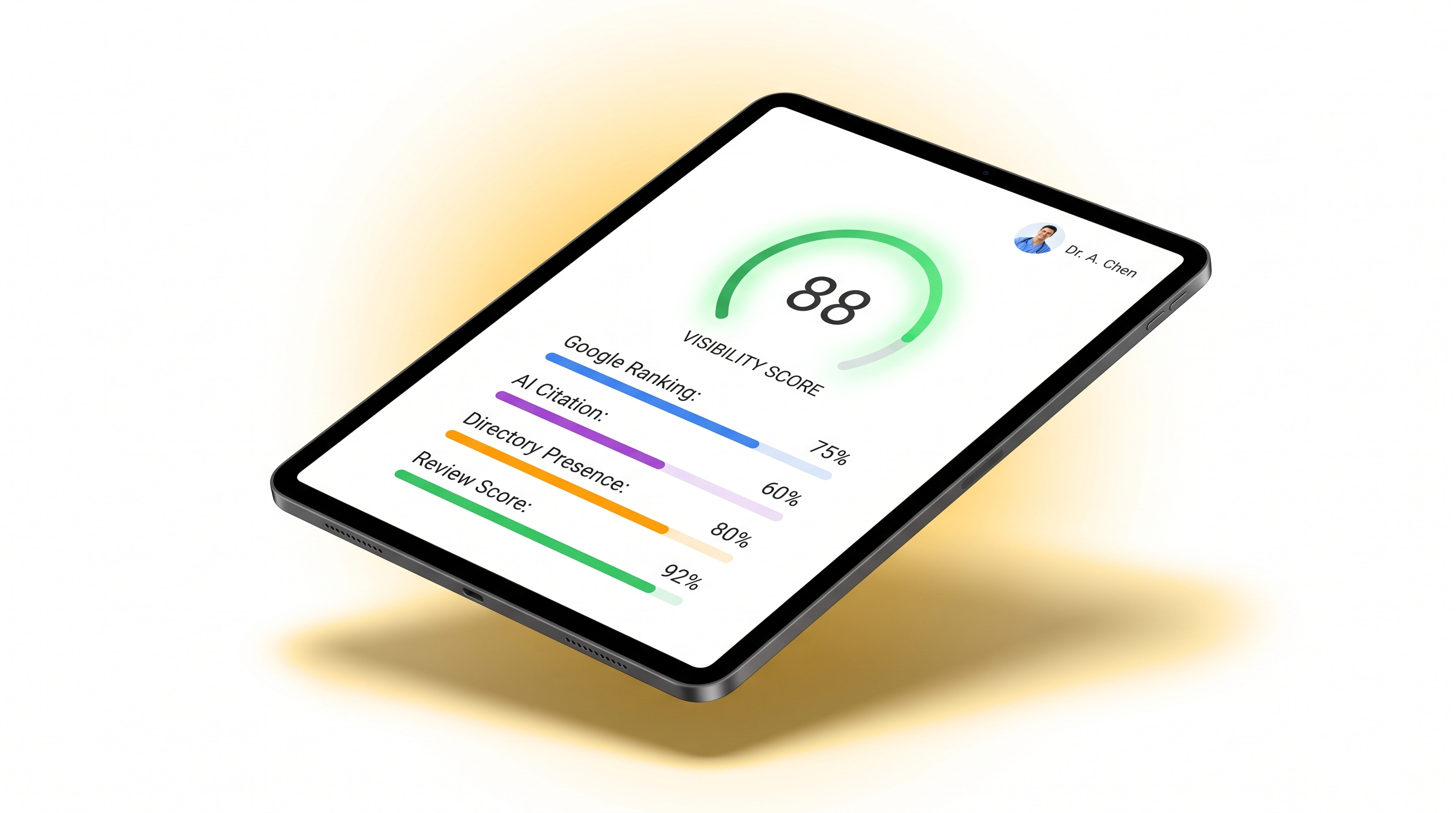
There is a new kind of report circling physician marketing: scan a practice's website, get back a single visibility score out of 100. The number is a useful gut-check. It is also easy to misread, and misreading it can send you fixing the wrong thing, because that one number is really three, and the one that matters is usually the one being propped up by the other two.
We pulled several of these reports on real practices. One scored a 40, which reads like a middling, fixable problem. Break the 40 apart and it is three separate grades: 14 out of 50 for showing up in ordinary search, 22 out of 25 for the quality of the website itself, and 4 out of 25 for whether an AI actually recommends the practice. That 4 is the real story. Asked who to see, the assistants named this surgeon zero times. His good website and passable search presence were quietly carrying the whole score, and the number that mattered most was buried inside a total that looked survivable.
The website grade and the AI grade are not the same thing
The whole reason these scores split into pieces is that a strong website is not the same as being found. A practice can build a fast, clean, well-organized site, score high for it, and still be a name no AI will say out loud. One grade measures the building. The other measures whether anyone outside is being sent to the address. A single blended number lets a great score on the first hide a near-zero on the second, which is exactly the thing you needed to know.
Why the total flatters, almost every time
A blended score usually overstates your real position, because the two things easy to score well on, a decent website and some search presence, are the two with the least to do with whether an AI recommends you. The hard thing, being confidently named, is the one most likely to be low, and it gets averaged upward into a total that feels like a minor tune-up. The report says 40. The truth says nobody is naming you. Those are very different problems, and only one of them is worth your attention.
Read your own score the right way
If you run one of these scans, ignore the headline number and go straight to the line that grades AI recommendation. Read it alone. If it is low while the rest looks fine, you do not have a website problem and you do not have a small problem. You have a problem being named, which is the one a patient feels when they ask an AI who to trust. To understand what actually moves that specific line, read how to get your practice recommended by ChatGPT.